Blog

J-HuD the Angelic Voice of our TIME!

Jennifer Hudson a Chicago native is an inspiration to anyone who never thought dreams could become your reality. She rose to fame after her lose on American Idle. A lesser woman would have given up, threw in the towel and went back to the hood to become a has been or would have. Thank God she didn’t, because she wouldn’t be the poster child for determination.

J Hud whom began her singing career in Church and graduated from Dunbar Vocational Career Academy in Chicago, is a force to never be messed with. After the death of her mother, sister and nephew in 2008, she removed herself from the public eye. I never had a doubt the J Hud would be back. Oh, and she came back on fire.

Ms. Hudson is resilient and has a renewed outlook on life. As a new mommy she gets the opportunity to pass on all the love her mother gave to her. I can personally relate to Jennifer because of the lose of my mother. Instead of feeling sorry for myself, blaming God and giving up. Jennifer and I decided to take time to collect ourselves and go all in. God, Family and Progress are our priority list.

If you’re ever down and think you can’t go on. Remember that if Jennifer can do it so can you!

Watch J Huds Dynamic Performance

I encourage you to undertake something that is difficult…it will do you good, because unless you try to do something beyond what you have already mastered, you will never grow to be a man/woman of influence!

Married To The MOB Founder talks about her rise to power and how the NY Police helped her.

How Higher Education Is Making Us Broke | TheLoop21.com

Student loan debts have reached crisis levels, especially for Blacks.

By: Shanon D. Murray | TheLoop21 (Add to your loop)
Thu, 12/23/2010 – 5:30am
With student debt nearing $1 trillion and Americans owing more on student loans than on credit cards, you know it’s bad when the national media finally pays attention. And that’s exactly what happened this week when CNBC premiered a special called “Price of Admission: America’s College Debt Crisis.”

The report was compelling and well done except for one glaring omission: It didn’t feature any students or families who were African American or of any other non-white ethnicity. If CNBC goes as far as to say college debt is a national crisis – and indeed it is – then that fact should have been made obvious in its reporting about its effect on students and families from all ethnicities and backgrounds.

And the effects are deep and far-reaching. College seniors who graduated in 2009 carried an average of $24,000 in student loan debt. Meanwhile, unemployment for recent college graduates climbed from 5.8 percent in 2008 to 8.7 percent in 2009 – the highest annual rate on record for college graduates aged 20 to 24, according to the Project on Student Debt.

And when college students graduate into a recession, a likely result is student loan defaults.

I launched into the conversation about the college debt crisis last month in an article asking whether Historically Black Colleges and Universities were adding to Black America’s economic crisis. I focused on HBCUs to try to isolate the effect on African Americans and because data analysis revealed that graduates of those schools are more likely to default on student loans.

The national student loan default rate is seven percent, which is the highest it has been since 1997, according to the U.S. Department of Education. But, as CNBC reported, there are concerns that that is a gross underestimation because the current rate only takes into account loans that are defaulted on in the first two years after they are come due.

Why does the federal government insist on using the two-year default rate? Primarily because that is the figure that determines schools’ eligibility for federal student aid, according to CNBC.

Under current federal rules, all schools with default rates of 25 percent or greater for three consecutive years face loss of eligibility in the federal student aid programs. Schools with a default rate greater than 40 percent in the latest year may lose eligibility to participate in the federal loan programs.

Using a longer period to determine a school’s student loan default rate would undoubtedly increase the rate for most schools. In fact, some estimate that 1 in 3 students will default on their student debt during the life of the loans.

Much like the mortgage and foreclosure crisis, the student loan debt crisis is clearly another economic bubble that will further devastate families and households once it bursts.

But what continues to feed it is the disconnect between the goal of graduating college and the skyrocketing costs of education.

Even President Obama during his press conference on Wednesday about the lame duck congressional session reiterated that “education is the single most important determinant for our children’s success and our country’s success in the 21st century… We have to make sure young people can afford to go to college.”

Obama also said it is a national priority to make sure colleges and universities “aren’t restricted to just people who can afford it but are open to anybody with talent and a willingness to work.”

Yet students are caught in a vicious cycle of ever-increasing educational costs and fees that leads to taking out more student loans to attend schools that continue to raise its costs and fees. And at the end of the day, colleges and universities keep the thousands of dollars students borrow while students keep the debt.

It’s a business model that puts all of the risk on students.

Historically, education has always been the surest way to climb the economic ladder. Not only is it a necessity for African Americans, but Obama has made graduating college a national mandate to increase U.S. competitiveness around the world. But if college is a key to success, can we afford it? Can we afford not to?

Shanon D. Murray, an MBA and former financial writer and editor, is a personal finance blogger for TheLoop21.com. Email Shanon at shanon@theloop21.com. Follow her on Twitter @ShanonDMurray.

How Higher Education Is Making Us Broke | TheLoop21.com

Ay Shawty Can I Holla at You! Street Harassment a Problem for Young Girls

Provided by: Helping Our Teen Girls Organization (HOT Girls)

http://www.helpingourteengirls.org/programs/street_harassment_campaign.htm

What is Street Harassment?

In general, street harassment refers to a range of harassing behaviors that occur on the street or in other public places including catcalling, sexually explicit comments, unwanted touching, and other unwanted attention and behavior. Street harassment is as an under-recognized problem with potentially harmful psychological and physical consequences for black young women and girls in Atlanta (and around the world).

Hey shorty, Can I get a piece of that ass?Right: What Girls Hear on the Street

Why is Street Harassment Important?

We believe street harassment is an important issue to address because it is part of the larger problem of violence against women and girls in Atlanta and around the world. Even though many women and girls are harassed on a regular basis, many people do not recognize that street harassment is a problem. Some people don’t realize that their behavior is considered disrespectful, annoying, or in some cases– threatening. And some girls are disrespected so much that they think that street harassment is just a part of daily life.

What Are We Doing to Stop Street Harassment?

Girls working on a posterTo address the issue, the Teen Advisory Board began by collecting stories about girls’ experiences with street harassment and developing educational materials to raise awareness about the impact of street harassment and violence against women and girls.
The Teen Advisory Board organized a summitfor teen girls ages 13-19 in July 2005 to raise awareness about these issues, as well as images of black women and girls in the media and hip hop culture. At the 2008 summit, we invited teen boys to our summit to help us find creative ways to challenge gender-based violence.
We are continuing to develop health education materials including web content for teen girls and an educational web site for young men and boys. The purpose of the materials is to educate harassers, targets, and allies about street harassment and combat denigrating stereotypes about black women and girls that contribute to harassment and disrespectful treatment on the street and other settings (i.e., schools, shopping malls, etc.). These materials will be distributed on the Internet and at public places where youth congregate. 

Our anti-street harassment initiative was featured in an article.

Click here to listen to our anti-street harassment song, “Let Me Tell You How To Talk To Me,” recorded at the Harland Boys & Girls Club (produced and mixed by CW). Click here to read the lyrics. 

Girls in the recording studio
Above: Girls Leadership Council members in the studio recording “Let Me Tell You How to Talk to Me”

Street Harassment Resources

Young Women’s Action Team
Street Harassment Project 
Anti-Street Harassment UK

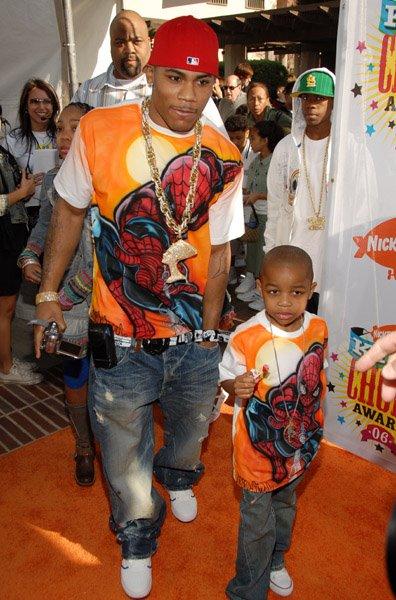
Nelly moves forward in life by giving back

Reuters, Dec 23, 2010 3:59 pm PST

Ten years into a successful career, rapper Nelly is all about giving back to his hometown community and to the fans who helped make him famous.

Since his debut album, “Country Grammar,” in 2000, the 36-year-old hip-hop star has sold more than 20 million records, has had nearly a dozen Top 10 singles (including this year’s “Just a Dream”) and was rated the No. 3 artist of the decade by Billboard magazine behind Eminem and Usher. His sixth album, “5.0,” debuted at No. 10 on the Billboard 200 chart in late November.
The record, his first in two years, hasn’t sold as well as some of his other discs, but that has been true of many artists recently as digital downloads weakened CD sales.
The album’s mix of rap and R&B has not gone over as well with critics, either, and some have even labeled Nelly an “underdog,” in moving into arenas outside his home arena of hip-hop. The description puzzles Nelly.
“My music is all about growth,” he told Reuters as he entered his 5th annual Black & White Ball in St. Louis this past Sunday. “I’ve got a lot of great things coming. And to me, ten years of doing anything is a blessing.”
“5.0” includes collaborations with Diddy, T.I., Chris Brown and a reunion with Kelly Rowland, who worked with Nelly on the Grammy-winning “Dilemma” in 2002. And while Nelly was coy about his future music plans, he said he is more than satisfied with the progress of his career so far, calling it “phenomenal.”
The gentle rapper was all smiles as he made this way through the posh crowd at the Black & White Ball. He wasn’t interested in basking in his music accomplishments. He was keen to talk about helping others and continuing his personal push to improve St. Louis’ reputation among U.S. cities.
CELEBRATE ST. LOUIS
“With the Black & White Ball I wanted to start something to celebrate St. Louis,” he told Reuters. “Nice dinner, nice evening, nice time, nice night of music and entertainment. It’s a chance to give back. I thought that was a hot thing to do.”
But The Black & White Ball isn’t the only thing Nelly, whose real name is Cornell Haynes Jr., does to “give back.”
He runs the non-profit 4Sho4Kids Foundation, whose work is dedicated to his sister Jackie Donahue, who died in 2005 from leukemia. His Jes Us 4 Jackie fundraising campaign aims to educate African-Americans and other minorities about the need for bone marrow transplants and donors.
This Christmas, he is promoting the teenage not-for-profit group, DoSomething.org and their “Tackle Hunger” campaign, which encourages teens to take actions that will fight hunger in their own communities.
“We try to feed as many hungry kids in this country as possible. I know we do a lot to help people outside this country, but we have so many kids inside this country that need our help as well,” he said.
Where his St. Louis is concerned, Nelly still caters to the hometown fans who, for years, championed him. This past summer, he put on a free concert, and he has filled-in as a DJ on local radio. Moreover, he defends the metropolis against its reputation as one of America’s most dangerous cities.
“The numbers are a little misleading,” he said. “It’s all about how you stack that up and what you compare it to. You can make anything as dangerous as possible, but I think overall we have crime like everybody else — but I don’t see it as being any more dangerous than anywhere else.”
(Editing by Bob Tourtellotte)

Jumpstarting Your Personal Brand After Mommy-hood
Written by Karen Taylor Bass on March 18, 2010

R&B Singer Monica shares her tips that keep her ‘Standing’ strong as she re-invents her career


Mommy-hood is no easy feat; regardless of age your mind, body, spirit and career will never be the same. The moment you meet your healthy and beautiful bundle of joy, your priorities will shift and you will change. But after the maternity leave has ended, how do you re-invent your personal brand to incorporate your new status when its time to go back to work?

At 43, with two kids (including a toddler), and in the midst of a re-invention, I have recently upgraded from sweatpants to fitted jeans, and the process to become the “brand” new mommy has not been easy. I had a thought: do all mommies—including celebrities—struggle to re-define their personal brand? The answer is a resounding yes.

Recently I spoke with Grammy Award winning artist Monica, about re-defining her brand after a brief hiatus from the music industry. Sure, she has “fame,” a TV show, and a new album coming out, but at the end of the day, she shares the same concerns as I do about re-invention and re-entering the workforce after becoming a parent.

“The best sage wisdom someone told me about re-invention is to focus on the positive, what makes you special and different, and realize that just because you put yourself first, doesn’t mean your kids are not your first concern,” said the single mother of two pre-schoolers. Re-invention is not about the superficial but the qualities that make you feel centered as a person, says Monica.

After taking time off to have her children, Monica is back with a vengeance. She has a reality show on BET that chronicles her re-invention as she finds balance being a single parent, dealing with high blood pressure, recording a new album, building a business, and struggling to carve out moments to be still. Her fifth album, “Still Standing,” is scheduled for release on March 23. She chose the name as a testament of strength to all of us finding our way back home to self.

“Re-invention happened for me organically and I learned that it can’t be contrived,” she says. “My oldest son, Ramone, almost 5, loves to hear me sing and perform; he was the one that encouraged me to get back out there. I started this journey at 14 and built over 15 years of relationship. Re-invention is not about working hard, it’s about being smarter, utilizing and preserving relationships, and having a dynamite support system [mom, aunt, and cousins]. Pay attention to your elders and shape shift your mommy-hood to work for you.”

Listening to her, I realized that Monica is wise beyond her 29 years.

The same way it is important to refresh our brand and skills to take advantage of a job or opportunity during this recession, it is as important, if not crucial to renew and redefine the personal brand upon giving birth. It is imperative that we do not lose our magic once we have children.

“When you re-invent allow your brand to speak for itself, take your time and feel pretty—pray, light candles, walk, and remember you are the most important person. Re-invention is about weathering the storm, claiming victory, being comfortable in one’s skin and making no apologies. That’s what re-invention and mommy-hood are all about,” says Monica.

I learned that regardless of age, socioeconomic status, and career choice, there is no quick fix for re-invention when it comes to mommies.

Monica’s Re-Invention Tips for Women:

1. Be Faithful. Spirituality is key and will play a major role in life. Don’t fight it; just accept the fact that you are not in control.

2. Prioritize. Your kids and family comes first.

3. De-clutter. Negativity becomes a hindrance. Clear out things that no longer work—be they relationships, jobs, or items from your past.

4. Respect Yourself. Don’t sell yourself short for anyone or any opportunity.

5. Ownership is Key. You are your own boss, act and do what you want to do, when you want to do it.

6. Assemble an A-Team: Your support system and relationships are key ingredients for re-invention. Conjure up the female power. Join a support group like Mocha Moms.

I would love to hear from you about re-invention post babies. What did you do to get your personal brand back in gear?

Karen Taylor Bass, The PR Expert, provides entrepreneurs, corporations, and mompreneurs with essential branding, marketing, and public relations coaching; http://www.karentaylorbass.com and http://www.taylormademediapr.com. Follow Karen’s tips and Caviar & Chitlins moments at Twitter, twitter.com/prexpert.

Are You Prepared To Thrive Despite What Life Throws At You?

Oh to be agile, and not just in the sense of physical agility, although that would be nice too. The sense of agility that I’m referring to is, the ability to change focus, change the direction of your life, quickly and with as little impact on your life as a whole.

Being able to quickly change direction, refocus, and get back on track are key qualities to establishing agility in your life. By being agile you’re better able to act on ideas, opportunities, and you can quickly start taking these ideas forward. But this is easier said than done, right? How can we become more agile? What if what it takes to become agile isn’t immediately obvious to us?

I have a few ideas that can help you get started on your path to being more agile in your life.

1.Non-attachment

Imagine you have an idea you’re working toward or a goal that you’re striving to complete. You put the blinders on and become so focused on that one thing, you hang all your hopes and dreams on attaining it that you miss all the other opportunities that have come your way. This usually translates into you not being willing (or able) to change directions or look at other opportunities as having potential because you’re so focused on getting to that one ideal you’re so attached to.

Strict attachment to ideas and things, not only leads you to unhappiness, it also prohibits you from changing directions and simply going with the flow. As a result you’ll likely miss out on a lot of great opportunities along the way.

2.Be open minded

This is an extension of non-attachment. Once we let go of this one perfect idea we have for our life, we’re more open to accepting other ideas and other directions that may get us somewhere even more fulfilling, better or safer. To be open minded you need to be willing to listen to people and hear out ideas that may initially make you shudder, chuckle or roll your eyes. If you’re open-minded enough you will be able to take in the information, mull it over in your own head, research it and evaluate it and only then make a decision on it. By dismissing things too quickly simply because they make you uncomfortable or maybe you just don’t know enough about it, you just might be missing out on some great opportunities.

3.Make many little changes and put them out there

The thing many of us (myself included) get hung up on is perfection. We keep things hidden behind closed doors, because we’re not ready to put it out into the world. We’re not ready to let others see it and judge us based on what we’ve put out into the world. Well the sooner you realize that nothing is ever perfect the better off you’ll be. I would strongly urge you to try working towards “good enough” as opposed to “perfect”.

Work on little functional changes at a time and release them as quickly as you can. You will have more agility if you are able to change direction quickly based on immediate feedback from your customers, family members, or co-workers. Waiting until you have everything “just so” is okay but what if it’s not what everyone else wanted? What if the desires of everyone else have changed? What if one little thing sparked another train of thought that results in you having to throw out half of what you’ve already completed and start over to get to where everyone wants to get to now? Release little changes as quickly as possible and seek feedback and suggestions along the way.

4.Embrace change

Change can be very scary for some people. Some people enjoy feeling comfortable and secure and really count on the predictability of each day. If you are one of these people, that’s fine but to be more agile in life or at work, you need to be willing to step outside of your comfort zone and embrace change. This won’t happen over night, it definitely takes time but it can be done.

Start small and jump at every opportunity for change that you encounter. Like anything else the more you do it the more it will become a habit and the more successful you’ll be at embracing change. By not fighting change and instead embracing it processes are more likely to be improved and productivity and efficiency improves. Start today and take initiative to make deliberate changes to your life, your family and your situation as a whole.

Being agile is a great thing and it can result in a much richer and more interesting life. You will be better able to cope with (and circumvent) road blocks or obstacles that inevitably find their way onto your path. Being agile can help you keep a competitive edge and allow you to make decisions quickly and respond in a timely manner in any circumstance.

Are you an agile person? What other ideas can you think of that could move people to becoming more agile in their life?

Written on 12/16/2010 by Sherri Kruger. Sherri writes at Zen Family Habits, a blog celebrating all things family. Sherri also writes on personal development at Serene Journey, a blog dedicated to sharing simple tips to enjoy life.