Blog

Do Black Boys Learn Differently than Other Children?

Only 12% of Black Boys are on Grade Level! – ‘Understanding Black Male Learning Styles Critical to Academic Success’

Provided by PR Newswire

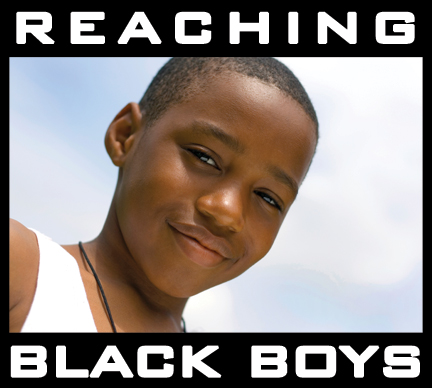
NEW YORK, Feb. 21, 2011 /PRNewswire-USNewswire/ — Dr. Jawanza Kunjufu, national education consultant and bestselling author of the newly released Understanding Black Male Learning Styles, believes that today’s classroom is no place for a growing African American boy. Schools have virtually ignored the fact that boys and girls learn differently and that they mature at different rates. African American male students suffer the most from this neglect.

Kunjufu asks, “Have we designed a female classroom for male students? Are we expecting boys to learn in the same manner as girls?” Since 1985, Kunjufu has advocated for single-gender classrooms and schools to meet the learning, social, cultural, and emotional needs of Black boys.

The Kunjufu Learning Styles Model

The secret, says Kunjufu, is understanding how they learn. “If teachers teach to students’ learning styles, if they create stimulating, culturally relevant learning environments, our boys will excel in school,” he says.

Kunjufu estimates that as many as two-thirds of students and an even larger percentage of African American males are right-brain learners, however, most of the learning activities are oriented toward visual-print learners (left-brain). This has created a disastrous learning environment for right-brain students, and it must be resolved if Black boys are to improve their classroom performance.

“Educating the African American and Hispanic Male Child National Conference,” May 3-4, 2011, Chicago, Illinois.

SCHOOL SETS

Children’s Library 260 books $2,800 * Black History Curriculum 67 books $680 *

President Obama 60 books $750 * Educators’ Library 28 books $300 * Hip Hop Curriculum 80 books $800 * Male In-house Suspension 50 books $400 *

Female In-House Suspension 50 books $400 * Black History Videos 10 Pack $200 * Hispanic History Culture 50 books $420 * Posters (230) $400 *

Biographies 25 books $350 * Parent Set 28 books $300 * Math Set (Elem. or H.S.) 30 books $600 * Respect/Manners/Home Training 25 books $200 * Books for Boys/Girls 20 Books $300 * Character 10 books $130 * Classics 20 books $280 * Maps 10 maps of Africa and the world $300 * Motivation 18 books $210 * Pre-School 60 books $670 * Black History Games (5) and Black History Puzzles (5) $200 * Complete School Set 556 books $20,700

For additional information, contact African American Images 1-800-552-1991, Fax# (708) 672-0466, P.O. Box 1799, Chicago Heights, IL 60412. Email: customersvc@africanamericanimages.com.

What is your opinion on this issue?

Progress is a Must!

It’s been awhile people. Sorry for the lapse in time but time flies when you’re living life. I hope everything in your life circle is progressing nicely. Let me update you on a few things.

Alisha’s Road 2 Recovery

My best friend Alisha is making great progress. She has come far from her bed ridden days and she is in a wheel chair (Praise God). She is currently undergoing rehab at the Rehabilitation Institute of Chicago. Please continue to keep her in your prayers.

Children of the Future 

I go through up and downs just like anyone actively pursuing greatness. I’ve encountered a few obstacles but I took those as signs I’m moving in the right direction. Anything worth fighting for is worth having.

I had an opportunity to participate in Umoja Community Connection Event. Each February Umoja coordinates a half-day event in which they invite volunteers who can truly represent the heart and vision of African American History Month to spend a day in the classroom with teachers and students. Volunteers co-facilitate with teachers to enter into dialogue around issues of culture, history, possibilities, and the future. Through reading, writing, and discussion this day helps students examine their own thoughts and opinions about their history, and gives them the chance to articulate those thoughts to their peers and to business and community leaders.

Unfortunately I wasn’t able to attend but my brother Nick was able to fill me in. Nick described the event as powerful, not in the sense that a lot was accomplished but the disparity in the hearts of the young men was revealed. All the young men had absentee fathers; they were not receptive to workshops or subjects presented, over all they were uninterested in all the suited up men wanting to through around their fancy degrees & advice.

I can’t say I’m surprised. I remember myself at 15 & 16 and I surely didn’t want anyone that didn’t look like me telling me what I needed to be doing. We have to try harder; we have to connect with youth on their level. We get so high and mighty with our degrees and expertise we overlook just being down to earth. Do what the President dose when he is talking to blue collar workers, wear blue jeans, roll up your sleeves and talk on their level about things they care about. It WORKS!

Dream Catching

I’m always talking about living your dream, so I’ve been presented with an opportunity to audition for a BET dance show. I’m going all in people! If I make I’m blessed, If I don’t make it I’m blessed and I tried. Life is about taking risk and enjoying the journey to our destiny. I’ll be leaving Friday. I’ll take plenty of pictures & video so you can witness greatness in the making. Wish me luck.

Keep us posted on your Rise2Power
 
    I Like this quote I dislike this quoteSuccess is steady progress toward one’s personal goals” -Jim Rohn

 
email us info@bgrise2power.com

Jay-Z Top Producer Young Guru Breaks Down How Music Artist Enslave Themselves.

So you’re trying to get signed to a major record company. Is that really what you want. Do you want to work twice as hard for half the money? Watch this video and leave a comment.

Young Guru’s Rise2Power

Born in the tiny US state of Delaware in 1974 as Gimel Keaton, Young Guru acquired his nickname in his teens, when he was teaching African history classes at a community centre. He also used his name when he began working as a DJ while still a teenager. In the early ’90s there were no clubs in Delaware, so Young Guru brought his own amplifiers, lights, microphones, and so on, which sparked his interest in music technology. He began DJ’ing in Washington DC in 1996, where he met singer/rapper Nonchalant, who had a top 20 single at the time, and became her tour DJ. Young Guru, who had taken piano lessons as a child, used the money he received from the tour to fund a six-month music recording course at Omega Recording Studios in Rockville, Maryland, which had a great impact on him. After Omega, Young Guru engineered Nonchalant’s second album, which was never released, but the producer, Chucky Thompson (Mary J Blige, Faith Evans) recognised the young engineer’s potential and invited him to come and work with him in Washington DC. In 1999, Young Guru went independent and moved to New York, where he worked with Deric Angeletti on his Madd Rapper project and with Memphis Bleek. The latter was signed to Roc-A-Fella Records, which led to Young Guru meeting Jay-Z.

http://www.soundonsound.com/sos/dec09/articles/it_1209.htm#top

Black Families Pass down DEBT instead of LEGACY

Despite high-profile success stories such as Barack Obama or Oprah Winfrey, the typical black family is poorer by some standards today than it was nearly 30 years ago. In a country where access to capital is everything, most blacks have nothing.


Part of the story of the recession is a story about jobs. The unemployment rate for most demographic groups essentially doubled during the recession, according to the Bureau of Labor Statistics. For blacks, the jobless rate rose from 7.7% to 16.5%, while the jobless rate for whites went from 3.9% to 9%.


Those disparities in employment are well known. What’s not fully appreciated is how deeply the recession cut into the incomes of black households, and how the recession devastated the wealth of black families.


Median net worth for black households dropped from $9,300 in 2007 to $2,200 in 2009, far less than the $98,000 owned by the typical white household.


Median household income for blacks fell 7.2% from 2007 to 2009, significantly more than the 4.2% decline for whites or the 4.9% drop in Hispanics’ income, according to the Census Bureau. (The median means half of households had more, half had less.) See the data on median income at the Census Bureau’s website.


It’s not until you look at the figures for net worth — assets minus liabilities — that you can understand just how marginalized blacks are in our capitalist society.


$2,200


Most blacks really don’t have any capital at all. The average black person leaves his or her heirs just enough to pay the undertaker, with the typical black household’s net worth totaling just $2,200, according to the latest data.


Let’s be clear: The vast majority of wealth in this country is owned by a few people, mostly white. It’s estimated that about 80% of all wealth is owned by 20% of the people, while about a third is owned by the top 1%. About 40% have no wealth at all.


What little wealth the typical black family has is mostly tied up in the house. With housing prices falling for the past five years, black wealth has been wiped out.


The typical black family had about three times as much wealth in 1983 than it did in 2009 — $6,300 in inflation-adjusted terms in 1983 compared with just $2,200 in 2009, according to an analysis of the Federal Reserve’s Survey of Consumer Finances. Read more about the survey on the Fed’s website.


The figures are shocking. In 2001, the median net worth of a white family stood at $124,600. For blacks, the median wealth was $12,500. For every dollar of wealth owned by the typical white family, the typical black family had 10 cents. Remember, these are figures for middle-class families.


By 2007, the median wealth for white families hit $143,600, thanks to the housing bubble and a stock-market rally. But blacks were left behind. They don’t own many financial assets, and they missed out on the housing bubble almost completely. Their net worth fell to $9,300. For every dollar of capital owned by middle-class whites, middle-class blacks had 6 cents.


Then things got even uglier. By 2009, the typical white family had $94,600 in wealth, compared with $2,200 for blacks, according to an analysis by economist Edward Wolff. Blacks had 2 cents on the dollar.


Hold on a minute. How can it be that blacks missed out on the housing bubble? According to conventional conservative wisdom, the housing bubble was inflated specifically to help blacks buy homes through government policies, such as the Community Reinvestment Act that forced banks to lend to blacks and other poor and undeserving folks.


Yet the facts don’t support that theory. The home-ownership rate for blacks actually declined during the housing bubble after rising in the late 1990s. After peaking near 50% in 2004, the ownership rate for blacks fell to 47% by the time the bubble burst in 2006. See home-ownership rates on the Census Bureau’s website.


Black home owners were targeted by predatory lenders in the private sector, though. When it came time to refinance their mortgages to take advantage of lower rates and the opportunity to cash out, blacks with good credit scores were much more likely to be steered into high-cost, high-risk subprime loans than whites with the same credit scores. Once black home owners fell behind, they were nearly twice as likely to be foreclosed on as similarly situated whites. Read more about predatory lending at the Center for Responsible Lending.


Wealth is like sourdough


Around the globe, accumulating capital has been seen as the key to economic development. The nations that have grown the fastest have been those with the most equal distribution of wealth. Asia is growing much faster than Latin America, for example.


But wealth is a bit like sourdough bread — you need a starter to get it going.


Each generation of black youth starts out with a deficit, not a legacy. Parents or grandparents don’t have the capital to pass along to the kids to pay for school, buy a home or start a business. Black college graduates carry a heavier student-loan burden than white graduates. White kids backed up by their parents can better afford to work at the unpaid internships that increasingly are crucial to enter certain professions.


Most black families are caught in a trap, and it’s not any better for millions of working-class families of other races. In a world where wealth begets wealth, upward mobility is a struggle. Poverty is just one layoff or illness away.


Americans like to believe that anyone can make it with hard work. If you are exceptional, hard work and a little luck might be enough. But if you have average talents, like most of us, there’s nothing like a little capital to get you on your way.


Unfortunately for many working-class blacks, whites, Hispanics and Asians, the Great Recession washed much of the wealth they’d managed to gain. It’ll be very hard to build it back up without a steady and good-paying job.


Rex Nutting is Washington columnist and international commentary editor for MarketWatch.


From Attitude to Assertive it’s all about BRANDING Yourself!

The job market is getting better but that’s no reason to bust out the party hats. With graduation around the corner for college grads, letting people know who you are and what you’re about is more important then ever. I’m talking about the art of BRANDING!

Image is everything and what people say about you after they know you is even more important. What is your personal brand. Are you the problem solver, life of the party, party promotor, event coordinator, the lazy friend, the slacker. I’m sure you are labled for something, the question is are you controlling your brand.

Let me help you!

Only you know what you want people to think of you. It’s fully up to you to control what people say and do for you. If people like you and what you stand for they are more likely to help you get what you need. If they don’t like you, well they just give you a shady “Good Luck”.

Check out these 3 Articles and begin to apply them to your daily routine.

Let’s Get Branding!

Take yourself from “OK” to “Blazin” with these helpful branding tactics.

Get the job you want by focusing on your best qualities ALL the TIME.

How to Brand Yourself After College

BG Rise2Power Network
“Raising the Bar on Life.”

Black History Happens Everyday!!

Keep Hope Alive!
Black Power!
I’m Black and I’m Proud!
Yes We Can!

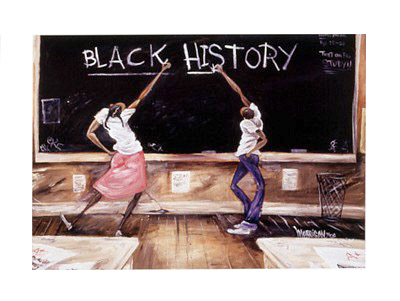
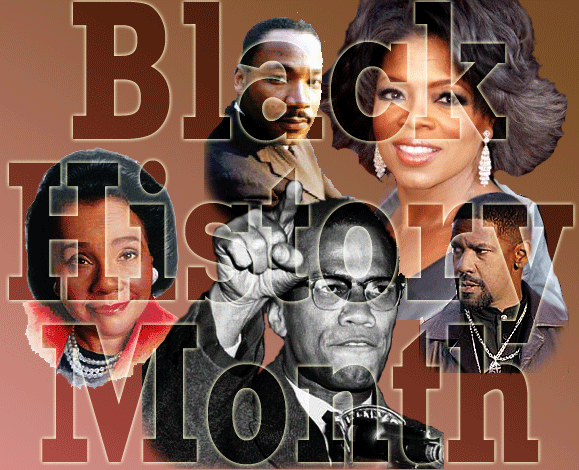
I love this time of year. February is a time of Love (Valentines Day) and Appreciation (Black History Month). Schools around the world will highlight the many accomplishments of African Americans. Preschools will act out the “I have a dream speech”. High School students will sing songs of triumph and equality. Grammer School students will have African inspired assemblies. I appreciate Black people on a daily basis but it’s refreashing to see others join in the practice of uplifting others.

It’s been 2 years since President Obama has been in office and His accomplishments alone is a realization of the progress we have made over the past 70 years.

I urge everyone of every race to join in the celebration. Here is a list of activities in the Chicagoland Area.

Enjoy! Let Me know if you go. I may meet you there.

Black History Month events

Libraries, theaters, museums recognize African-American heritage

January 31, 2011Black History Month kicks off Tuesday, with institutions around the Chicago area offering a variety of ways to recognize black heritage and history. A sampling of those events:

•The Chicago Public Library plans to kick off a month of events at the Woodson Regional Library, 9595 S. Halsted St., Chicago, with Cerqua Rivera Dance Theatre at 6 p.m. Wednesday. Those interested in attending can call the library reference desk at 312-747-6924 to confirm that this event is taking place as scheduled. For more information on all events planned by the library, visit http://www.chipublib.org.

•The Harold Washington Library Center, 400 S. State St., will offer an introduction to the African American History Genealogy database at 10 a.m. Saturday to demonstrate how people can use newspapers, biographical and history databases, and genealogical and census information to piece together the stories of their families. Registration is required at 312-747-4600.

•The play “Spinning Into Butter” explores race, racism and political correctness at the Josephine Louis Theater, 20 Arts Circle Drive, Northwestern University’s Evanston campus. For a full schedule and ticket information, visit communication.northwestern.edu/tic.

•”Expressions of Michael Jackson,” a tribute to the King of Pop, will be performed at Chicago branch libraries by the group For Children, By Children. The show begins at 2 p.m. on Saturdays at four locations; Saturday at the West Chicago Avenue branch, Feb. 12 at the North Pulaski branch, Feb. 19 at the Albany Park branch and Feb. 26 at the Jeffery Manor branch.

•The DuSable Museum, which celebrates black history year-round, will host a lecture series in conjunction with the exhibit “Let Your Motto Be Resistance: African American Portraits.” Kristen P. Buick, associate professor of art history at the University of New Mexico, will trace the life of sculptor Edmonia Lewis, 5:30 to 8 p.m. Feb. 10, and Deborah Willis, curator of the exhibit, will discuss race and photography in African-American imagery, 5:30 8 p.m., Feb. 24. For more information, visit dusablemuseum.org.

•The City of Evanston Cultural Arts Division, in collaboration with the Fleetwood-Jourdain Community Center, will host the exhibit “A Family Portrait” at the Noyes Art Gallery, 927 Noyes St. in Evanston, featuring works by the Turner family, including parents Josephine Curtis Turner and Robert (Bobby) Lee Turner of Chicago’s South Side. For more information, call the Cultural Arts Division at 847-448-8260.

•Storyteller Lynn Rymarz will bring to life the bus boycott and Rosa Parks, the civil rights icon who refused to give up her seat on a bus to a white person, at 11 a.m. Feb. 24, at the Harold Washington Library, in the program room of the Thomas Hughes Children’s Library. Call 312-747-4200 to register groups of six or more.

“Godmother,” a tribute to civil rights activist Dorothy Height with musical performances by B.B. King and Taj Mahal, was originally scheduled for Tuesday at Millennium Park’s Harris Theater but is being rescheduled because of weather concerns. For updates, call 312-334-7777 or visit harristheaterchicago.org.

•The Chicago Park District also has a number of events scheduled in honor of Black History Month. For details, visit chicagoparkdistrict.com.

— Compiled by Tribune reporter Erin Meyer

BG Rise2Power Network
“Raising the Bar on Life.”
http://www.bgrise2power.com/

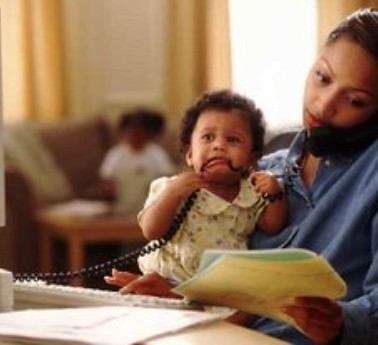
10 Myths About Single Black Mothers

10 Myths About Single Black Mothers
From madamenoire.com – 10 myths about single black moms


Myth 1: Single black moms have low-incomes: The ‘single black mom’ is most often portrayed as struggling and welfare-bound. She is not self-sufficient and because of this her children suffer.

Truth: Until you’ve seen or heard the reality of the situation with your own eyes and ears, reserve judgment. Many single, black mothers manage to maintain excellent jobs which allows them to support themselves, their children and anyone else she feels so inclined to bless.

Myth 2: A single Black mom raises delinquent children: Rarely does the media show a single black mother whose children can ‘do right.’ The child of a single Black mom is often portrayed as leading a doomed life filled with drugs, run-ins with the law, and illegitimate children.
Truth: Who among us doesn’t personally know someone who consistently overcomes obstacles, triumphs over any task and just so happened to be raised by a single mother. There are thousands. Never underestimate a black woman on a mission to raise a strong, successful child. Neither one of them can be stopped.

Myth 3: The single Black mom is just a ‘baby mama’: Most often, the assumption is that a single Black mom is and will always be a ‘baby mama’. She was not and will never be married and she is likely to continue to have children out of wedlock.

Truth: Many black women who have children out of wedlock do eventually marry the father of their children. When you have children with someone, you two will always share something and it’s difficult to walk away from that. Even if the mother and father of that particular child never get married, their situation may be beyond our understanding. The couple may not believe in a formalized, legal commitment, or more frequently the mother will find another man to marry.

Myth 4: Single Black moms are bad role models: Because they don’t have the “normal” family unit—mom, dad, and baby—many people assume that they are setting a poor example for their children and that their children are destined to do the same.

Truth: Single mothers can often serve as some of the best role models for their children. In any parenting situation, if the mother is honest, the child can learn from her mistakes, even if becoming a single mother wasn’t one of them. Portraits of single, black mothers often fail to include the possibility of death. Besides that, there are several single mothers who raise their children, obtain degrees, and serve as an inspiration for their children as well as others in their communities.

Myth 5: The father isn’t involved: When you’re a single Black mom—there is always the assumption that your child simply doesn’t have a father. As though, the child was just a product of some careless decision void of vows, love, or relationship.

Truth: There are countless examples of parents who aren’t together as a couple, but manage to stand as a united front when it comes to their children. If the parents are still together as a couple there are even more opportunities for him to bond with his children. Regardless of the situation there have always been black men who are invested in the rearing and nurturing of their little ones. This false assumption reflects poorly not just on black women but black men as well.

Myth 6: Single moms have unhappy children: Because single moms may not be able to provide for their child in the way that two parents can—the child is assumed to be unhappy, unfortunate, and pitiful because of its circumstance.

Truth: The reality is that there are plenty of unhappy children who live with both parents, under one roof. The fact is as long as the child’s environment is filled with love, support, and encouragement the child can thrive emotionally and there are black women who can provide that environment.

Myth 7: The child of a Single Black mother grows up too fast: Because a child is a product of a single parent home, he or she has their child-hood taken away from them and they must take on the role of the absentee parent.

Truth: Raising a child without the help of man does not automatically translate to ignorance when it comes to meeting the needs of a child. Many single mothers have the common sense and resources to raise children without relying on them to help out or pitch in just to get by. Without this increased responsibility, children from a single mom household have just as good a chance of maintaining their innocence for as long as possible.

Myth 8: Single moms lack love: The assumption is that a single Black mom, can’t single-handedly take care of her household and provide substantial love for her children, therefore, the child of a single mother isn’t properly loved or nurtured.

Truth: Single mothers can receive love from a variety of places, whether it be from a man, their family and friends, or most importantly from their child.

Myth 9: The single mom failed herself and her child because she can’t keep a man: A single mother often bears the burden of being viewed as inadequate because she could not keep her family together. Regardless of circumstance, she is at fault for having to raise her child alone.

Truth: Raising a child without a father might not be the worst situation, if the father was only going to serve as a burden to the children and the mother. While psychologists say it’s best for a child to have a father figure in the home, that person should be equipped to take care of a child. If he isn’t, it’s better to grow up with a single mother

Myth 10: Single black moms are designed to do it ‘alone’: The attitude that many single black mothers take is that they can do it by themselves, and while that might be true for some, it is not true for all. Single Black moms don’t plan to raise their children alone.

Truth: The support system for single, black mothers is often a force to be reckoned with. With grandparents, uncles, aunts and other family members the void of the absent parent can be soothed. At their best these people can help protect, guide, and nurture the child of a single mother.
Faith is a universal practice. No matter what race or religion you belong to Faith plays a significant role in how you cope with life. For all my beautifully blessed and purpose driven readers. The next time they ask how did you get so fly tell them “It’s the God in ME!”